
Details: PowerSmart 21-Inch Cordless Lawn Mower, 3-in-1 Battery Lawn Mower with 80V 6.0Ah Lithium-ion Battery and Charger
Brand: PowerSmart

Read more Ranging from a wide range of lawn mowers, snow removal, garden tools, drill driver, and generator, POWERSMART is commited to offer users throughout worldwide with highly practical and low failure rate of multi-functional and innovative series in terms of outdoor power tools. In years, our knowledgeable and accountable team continuous to take whatever it takes to create best vaule for our customers, you can 100% count on POWERSMAERT to help you get the job done. 21-inch 3600 RPM 80V Battery Lawn Mower POWERSMART-YOUR LAWN CARE’S CHOICE POWERSMART is aiming on developing innovative outdoor accessories and household tools for more than 10 years. Our pruposes is providing customers with high value products, assistances of garden maintances during daily life. Our specialized lines of lawn mowers and snow blowers contain with top powers and standards in the market, which includes gas powered, cordless, and large sizes machines. 21-INCH/3600 RPM 80V Battery Lawn Mower Push Mower 5 Adjustable Levels from 1.18” to 3.02” Cutting Width 21-INCH Large Capacity 1.8 Bushels Grass Bag 11.5-INCH Rear Wheel Read more PowerSmart 80V DC battery system, provides powerful working performance and long battery life. The five different heights can be adjusted between range from 1.18-3.0-inch according to different needs. Adjuesable handle allows different groups of people to use. The folding designed is also contained for storage purpose. 21-INCH full steel mowing deack provides high durability and great effectiveness. Read more Read more PS76821AP 80V Battery 80V Battery Charger PS76826AS PS76826SRB Drive Type/Voltage Push 80V 80V Self-Propelled Self-Propelled Working Width/Capacity 21-INCH 6.0Ah 6.0Ah 26-INCH 26-INCH Grass Bag/Charger Time 14.4 Gallon 90 Minutes / 18.5 Gallon 18.5 Gallon Mowing Heigh/Machanism 5 positions (1.18″-3.0″) / / 5 positions (1.18”-3.0”) 5 positions (1.18”-3.0”) Service Period 24-Month 24-Month 24-Month 36-Month 36-Month

Advantages
- Products can be returned
- Make sure this fits by entering your model number.
- #1 powerful battery lawn mower.
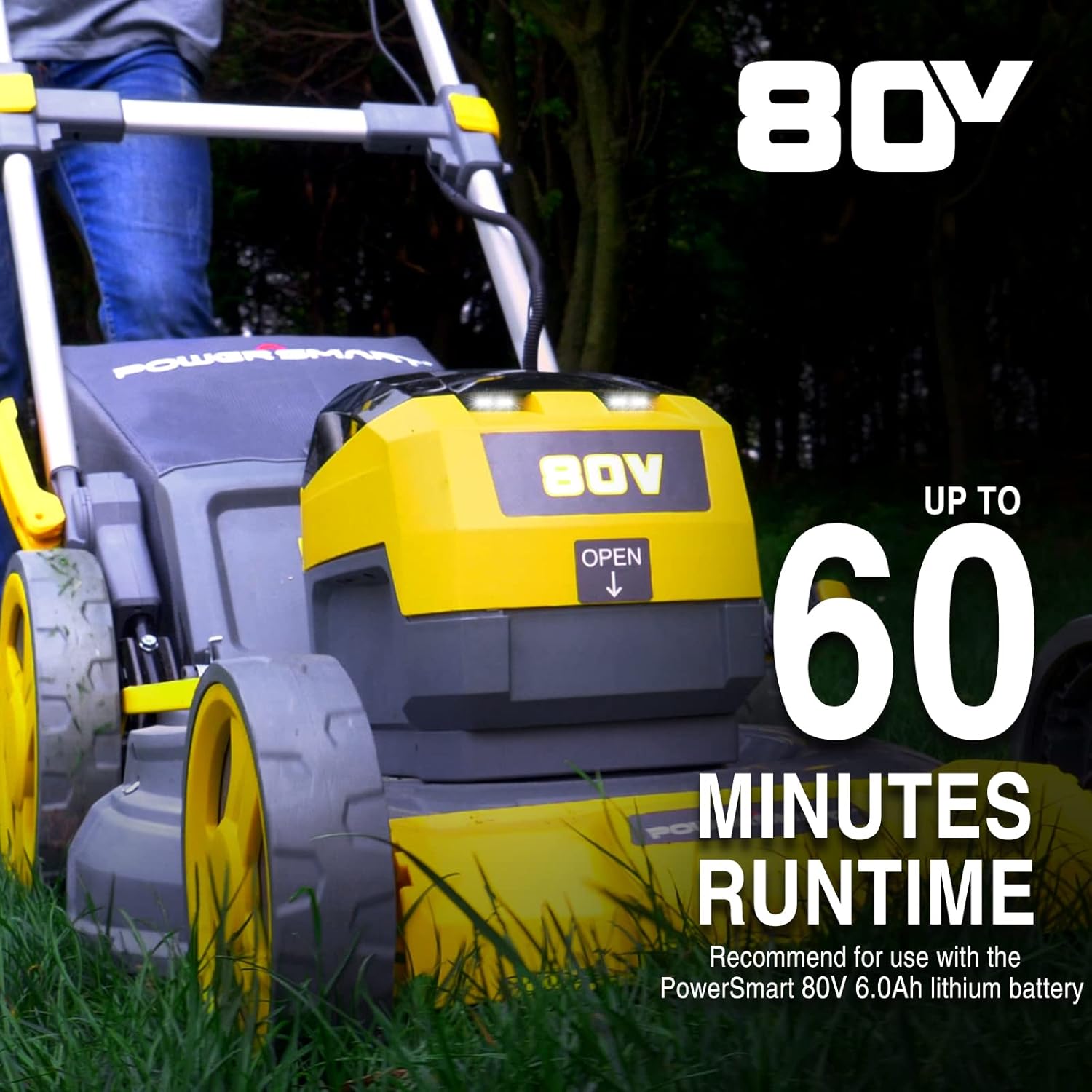
- Up to 60 minutes of run time on single charge with PowerSmart 80V 6.0Ah Battery, cuts over 1/2 acre grass.
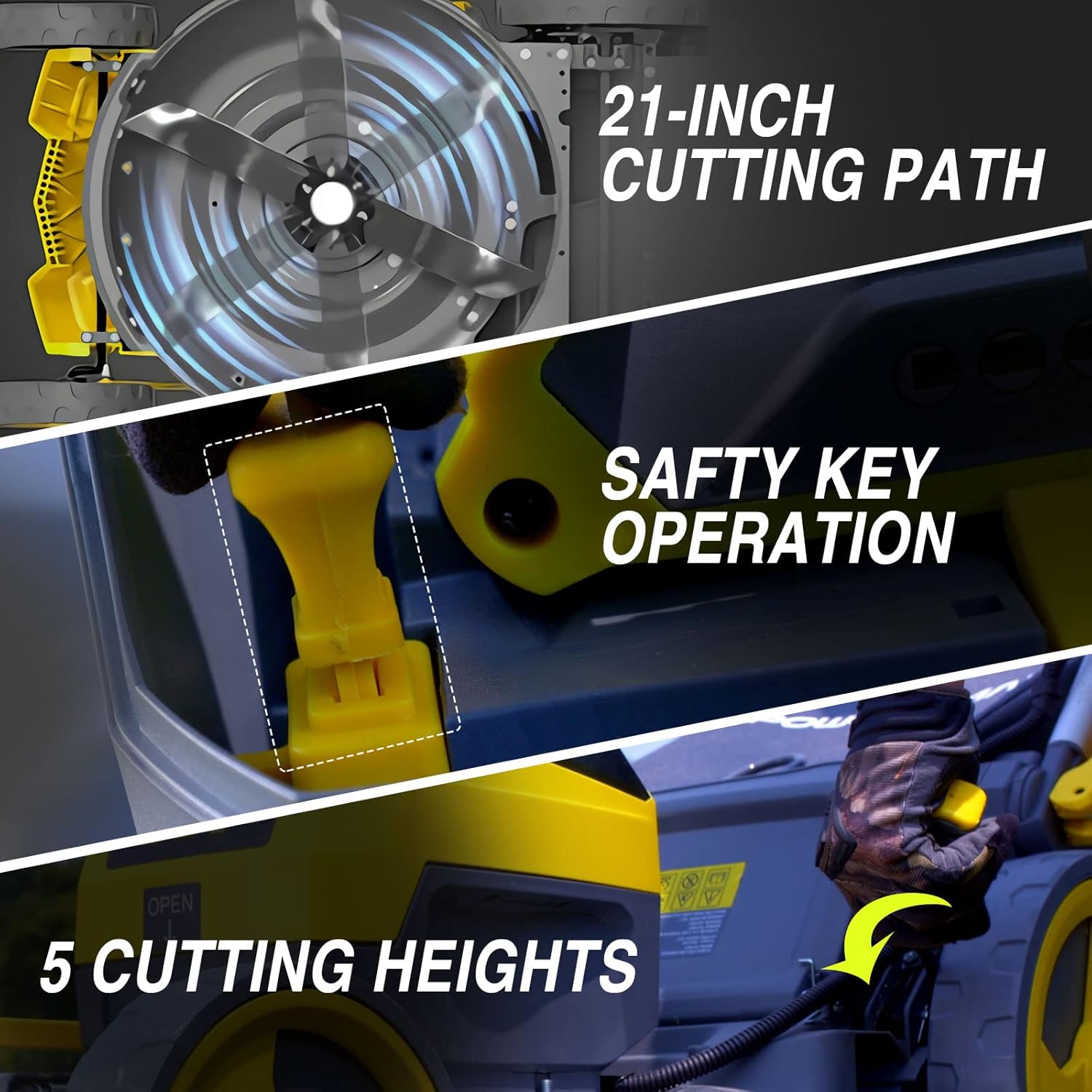
- 21″ steel deck, top rated brushless motor.
- 5-position height adjustment.
Notice
- Is an online purchase
- Delivery may be delayed in some areas.
Buyer Guide Walk-Behind Lawn Mowers
[wpts_spin]{ 3D scanners are an important tool for creating a digital copy of an object to use as a template. They come in all shapes and sizes, from handheld scanners that can copy small objects, to larger scanners that scan large objects, such as standard-sized cars.
- Consider the object to be scanned (size, shape, material).
- Consider the purpose of the scan. You may scan an object for personal use, or for a group project, in which case you’ll want to look for scanners that work well for both small and large objects, and that work with different materials.
- Consider the scanner’s features.
- Consider your intended environment. For example, if you’re scanning small objects, a handheld scanner may be all you need. But if you’re scanning something large or hard to scan, consider a large scanning device.
- Consider your budget. Scanners can be pricey, so you’ll want to consider your starting budget when deciding which scanner is right for you.
- Consider your level of expertise. If you’re just starting out, you may want to invest in a handheld scanner. That’s cheaper than a large scanning device and requires no prior knowledge.
- Consider support. Some scanners have built-in support, while others don’t. You may want to consider support options if you’re new to 3D scanning.
| A 3D scanner is a machine that allows objects to be scanned, scanned, and then reconstructed into 3D images.
- Laser scanner: This scanner, which works by capturing light, is the most accurate of the three types but is the most expensive.
- 3D camera: This scanner, which uses light, is less expensive but less accurate.
- Projection scanner: This is often the least expensive, but is the least accurate of the three.
- Low-cost scanners: These scanners are often used in education, but aren’t very accurate.
- High-precision scanners: These scanners are the most accurate, but tend to be expensive.
- Speed: Before buying, make sure you understand how quickly the scanner can scan an object.
- Resolution: The resolution of the scanner refers to the number of pixels in the scan.
- Accuracy: Accuracy refers to how close the scan is to the real object.
- Portability: The scanner’s portability refers to how portable it is.
- Cost: The scanner’s cost refers to how much it will cost you to buy.
- Software: Finally, the software that comes with the scanner refers to the type of software you can use.
| When it comes to choosing a 3D scanner, there are many factors you need to consider, including your budget, the type of 3D scanner that suits your needs, the scanner’s accuracy, and the scanner’s portability.
- Budget. The more a scanner costs, the more features it will have. Therefore, it’s best that you start with a budget in mind before shopping around.
- Accuracy. The scanner’s accuracy varies by manufacturer, but generally speaking, the more resolution a scanner has, the more accurate and photorealistic the 3D images will be.
- Portability. Portable scanners tend to be larger and heavier, while desktop scanners are lightweight and portable.
- Software. Some 3D scanners come with their own software, while others work with specific CAD software.
- Hardware. The hardware of a scanner is the part that is used to make 3D digital models.
}[/wpts_spin]
How to choose Walk-Behind Lawn Mowers
[wpts_spin]{ 3D scanners are useful for a variety of applications. Depending on your needs, there are a few features you should look for when purchasing a scanner:
- Resolution. Most 3D scanners can work with a resolution of around 250 to 600 dpi, and the higher the resolution of your scanner, the more detailed the 3D image will be.
- Aperture. The aperture is the diameter of the lens that scans the 3D image. The aperture determines how much light hits the lens, and this affects the quality of your 3D image.
- Size. The size/weight of a scanner is a very important factor. You will need to have access to a reliable power source, and your scanner should be portable enough to move around.
- Manufacturer. When shopping for a scanner, you’ll want to consider the reputation of the manufacturer. A high-quality, reliable 3D scanner will provide better images and scans.
- Price. The total cost of the 3D scanner is another important factor. You can get a scanner for around $100, but to get a professional-quality scanner, you can expect to spend $1,000 or more.
| There are a lot of 3D scanning options on the market today, so how do you choose the right one for your business? We broke down the factors you should consider before making a purchase:
- How large is the area you want to be scanned? If you want to scan large areas, you’ll probably want to invest in a larger scanning device that has a greater resolution.
- How many surfaces are in the area you want to scan? If you want to scan an entire building, having multiple scanners will allow you to scan different sections of the building and stitch them together.
- How accurate is the scan? The accuracy of the scan will determine how realistic your end products will be.
- How much data do you need? For 3D scanning, the more data you collect, the more usable the final products will be.
- How accurate do you need the final model to be? If you want high accuracy, you may want to invest in more expensive scanning devices that can capture extremely fine details and textures.
- What type of end product do you need? If you need models, we recommend choosing a 3D scanning device that can produce files that can be used to create 3D models. If you need objects, we recommend choosing a 3D scanning device that can produce files that can be used to create physical objects.
- How far away is the area you want to scan? Some 3D scanning devices, like laser scanners, require external light sources and reflectors to function properly.
- How long will the scan take? Some 3D scanning devices, like 3D scanners, require users to stand in a specific location while the scan is taking place.
- How accurate do you need the scan to be? The depth of the scan will determine the accuracy of the models.
- What material do you need to scan? To effectively scan an object, the material must be conductive.
| If you work in an engineering group, choosing a 3D scanner can be tricky. There are a variety of different types of 3D scanners available, and choosing one requires a bit of research and consideration.
- Magnetic or laser scanning? Magnetic scanning uses a focused magnetic field to create a 3D scan of the object. Laser scanning uses light or other electromagnetic radiation to create a point cloud of the object’s surface.
- What type of data is scanned? Most scanners offer at least one type of data a two-dimensional (2D) height map, a texture map, a point cloud, or a mesh model. When scanning an object with a 3D scanner, you should decide which type of data is the most important to you and your project.
- Do you need to texture your scan? If youre scanning an object with a rough, rough texture, you might not need to create a mesh model. However, if youre scanning an intricate object, such as an intricate piece of jewelry, you might need to create a mesh model of the object.
- How much money can you afford to spend? 3D scanners can cost anywhere from $300 to over $10,000. How much are you willing to spend?
- Do you need to scan an object with a non-planar surface? If the surface of an object is curved, your scanner should be able to scan the object. Most scanners wont scan an object with curved surfaces. Some scanners have a curved surface option so that an object can be scanned in a curved manner.
}[/wpts_spin]
How to maintain Walk-Behind Lawn Mowers
[wpts_spin]{ Maintaining 3D scanners is a lot like taking care of any other complex machinery. There are two main parts: the scanning head and the software/controller.
When it comes to the scanning head, there are a few key areas that you’ll want to keep track of:
- Time: Just like any machine, your 3D scanner has a specific lifespan. Depending on usage, you may be able to get anywhere from 5,000 to 100,000 scans out of it before it starts to break down.
- Temperature: Just like the average computer, your 3D scanner needs to stay between 65 to 85?F.
- Dust: Similar to a laptop or desktop computer, dust can build up over time. If it builds up around the scanning head, it can create blurry images or lead to other malfunctions.
- Compressed Air: Compressed air can be used to clean dust and other gunk out of the scanning head.
- The Software/Controller: When it comes to a scanner’s software, it’s important to keep it updated. Software updates improve functionality and fix bugs.
| Before purchasing a 3D scanner, its important to know the basics of maintenance and upkeep.
- How often should I clean my 3D scanner? Its always a good idea to regularly clean your scanner, but make sure to follow manufacturer instructions for specifics.
- How long will my 3D scanner last? Many people falsely believe that 3D scanners last for years, but in reality, they need to be replaced after a couple of years. Most 3D scanners have a life expectancy of 3 to 5 years.
- How often should I calibrate my 3D scanner? Many manufacturers suggest calibrating your scanner at least once every month. While some people believe that calibrating your scanner helps to improve its accuracy, this isnt always the case.
- Do I need to calibrate my 3D scanner after performing repairs? Many 3D scanners feature an alignment tool that automatically calibrates the scanner after performing repairs.
- Will software updates fix calibration issues? Many 3D scanners have firmware updates that can fix calibration issues.
| If youre the owner of a 3D scanner, its important to know how to properly maintain it. Just like other machines, 3D scanners do require a bit of maintenance. Otherwise, they will start to malfunction.
- Keep it clean. While its possible to clean your 3D scanner yourself, its more effective if you hire a professional to clean your scanner for you. Dirt and dust can easily clog your 3D scanner, leading to performance issues.
- Adjust your scanners settings. Your 3D scanner is programmed for optimal performance, so you dont want to damage your scanner by exposing it to too much heat or cold. To adjust your scanners settings, youll need to unscrew the scanners lid and use the manufacturers manual to adjust the settings accordingly.
- Tighten your screws. Sometimes, the screws that hold your 3D scanner together can become loose. To tighten your screws, use a pair of pliers or a pair of needle-nose pliers.
- Keep spare parts on hand.
}[/wpts_spin]
Related posts:
Review Echo X Series Hedge Trimmer
Review Twisted Wire Wheel, Stainless Steel Grass Weed Brush Cutting Head Performance Flexibility Wea...
Review RYOBI ONE+ 22 in. 18-Volt Lithium-Ion Cordless Battery Hedge Trimmer (Tool Only)
Review PARTSRUN Ignition Coil Replace Club CAR Golf CART DS 1992-96#1016492,ZF-IG-A00111-NEW
